Why Pennsylvania Winters Are Tough on Any Roof
If you live in Allentown, you already know that winter here is not a gentle affair. We get nor'easters, freezing rain, and repeated freeze-thaw cycles that can turn a sunny afternoon into a sheet of ice by evening. Your roof takes the brunt of it. Snow accumulates, melts slightly, refreezes, and then accumulates again. That cycle is what separates a roof that lasts from one that keeps you calling a handyman every spring.
Metal roofs are popular in the Lehigh Valley for good reason: they shed snow, resist wind, and last decades longer than asphalt shingles. But even a high-quality metal roof needs the right accessories and installation details to handle our local weather. Two topics come up in almost every conversation we have with homeowners: snow guards and ice dams. Understanding both will help you protect your investment and avoid costly surprises.
Snow Guards on Metal Roofs: What They Do and Why They Matter
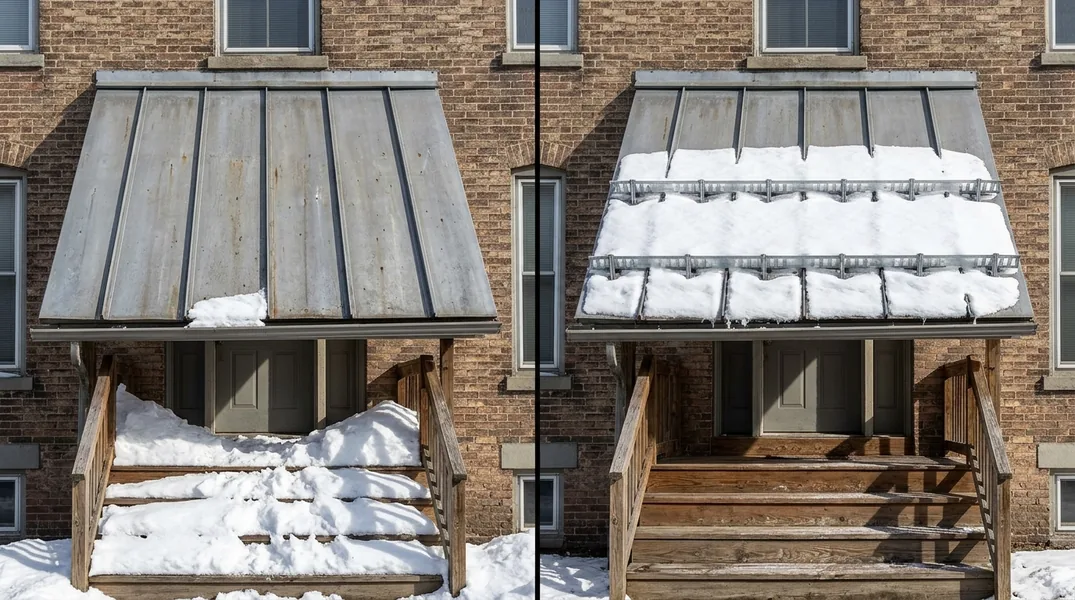
A metal roof is intentionally slippery. That is a feature, not a bug. It allows snow to slide off rather than sit and melt into your attic. But when snow releases all at once, it can come down in a heavy sheet, damaging gutters, crushing shrubs, and creating a hazard for anyone standing below. Snow guards are small brackets or bars installed in a grid pattern across the lower portion of the roof. They hold the snow in place until it melts gradually, breaking up the slide into smaller, safer pieces.
Homeowners in Bethlehem and surrounding areas often ask whether snow guards are required. Technically, they are not mandated by code in most of Pennsylvania, but they are strongly recommended anywhere people walk, park, or garden below the eaves. If your entryway, driveway, or a child's play area sits under a metal roof, snow guards are cheap insurance. They also protect your gutters and landscaping from the impact of sliding snow. During a Metal Roof Installation, we can plan snow guard placement based on your roof pitch, panel type, and the areas below.
Ice Dams and Metal Roofs: What Every Homeowner Should Know
An ice dam forms when heat escaping from your home melts snow on the upper roof, and that water refreezes at the colder eaves. The resulting ridge of ice blocks further drainage, and water backs up under the roofing material. On asphalt roofs, this often leads to leaks and rotted decking. Metal roofs handle ice dams better because the surface is smooth and the panels are joined with raised seams, but they are not immune. If your attic is poorly insulated or ventilated, an ice dam can still form, and water can find its way in at penetrations, fasteners, or the eaves.
The good news is that a properly installed metal roof, combined with adequate attic insulation and ventilation, dramatically reduces ice dam risk. Standing seam panels have fewer seams for water to exploit, and their slick surface encourages snow to shed before it can melt and refreeze. If you already have ice dams, a Metal Roof Replacement may be the long-term fix, especially if your current roof is nearing the end of its life. We often recommend upgrading insulation and ventilation at the same time. It is the most effective way to stop ice dams at the source.
Snow Load on Metal Roofs: How Much Is Too Much?
Snow load is the weight of accumulated snow and ice on your roof. In Pennsylvania, building codes specify a design snow load that varies by region, and the Lehigh Valley generally falls in a moderate range. Metal roofs are engineered to handle these loads, often better than asphalt, because the panels are lightweight and the structural framing does the heavy lifting. However, snow load is not just about the roof material. It is about the entire framing system, the span, and the condition of the decking. A roof that was marginal when new may become a concern after decades of wear.
If you are considering a Standing Seam Metal Roofing, we evaluate your home's structure and calculate whether any reinforcement is needed. In most cases, a metal roof is lighter than the shingles it replaces, so snow load capacity actually improves. That said, extreme events happen. After a major storm, it is wise to have a professional inspect the roof for any signs of stress, especially around valleys and penetrations. If you are unsure about your current roof's capacity, call us at (610) 600-9879 for a professional assessment.
Metal Roof Snow Sliding: Prevention and Safety
Snow sliding off a metal roof is normal and expected. The key is managing where it lands. Without snow guards, a sudden release can dump hundreds of pounds of snow onto a walkway or doorway. This is why we always discuss snow guard layout with homeowners in Easton and the surrounding communities. A well-designed snow guard system keeps the snow on the roof until it melts, or breaks it into manageable pieces that fall harmlessly. It is not about stopping snow from sliding entirely; it is about controlling the release.
Another consideration is the roof pitch. Steeper roofs shed snow faster, which is generally good for load reduction but increases the need for snow guards in high-traffic areas. Lower-pitch roofs may hold snow longer, making ice dam prevention more important. During a Metal Roof Over Shingles (Retrofit), we can incorporate snow guards and evaluate whether the existing ventilation is adequate. Every home is different, and a one-size-fits-all approach does not work in our climate.
Metal Roof Installation Near Me: When to Call a Pro
If you are searching for metal roof installation near me in the Allentown area, you have probably seen plenty of contractors. The difference between a roof that performs for 50 years and one that causes headaches often comes down to the details: fastener selection, panel attachment, snow guard placement, and attic ventilation. A contractor who understands Pennsylvania winters will plan for snow and ice from the start, not as an afterthought. That is especially true for Whitehall and other nearby communities where tree cover and shade can affect how snow melts on your roof.
We recommend getting a professional inspection before winter arrives. A quick check can identify loose fasteners, worn seals, or inadequate insulation that could lead to ice dams. If you are ready to discuss a new roof, we are happy to provide a free estimate and walk you through your options. You can also review our pricing to get a sense of what to budget. Call Allentown Metal Roofing at (610) 600-9879 today, and let us help you get your roof ready for whatever winter brings.
Looking for a professional metal roofing contractor in Allentown? Allentown Metal Roofing responds fast for all your metal roofing needs.
Get a Free QuoteOur services: Metal Roof Installation · Standing Seam Metal Roofing · Metal Roof Replacement